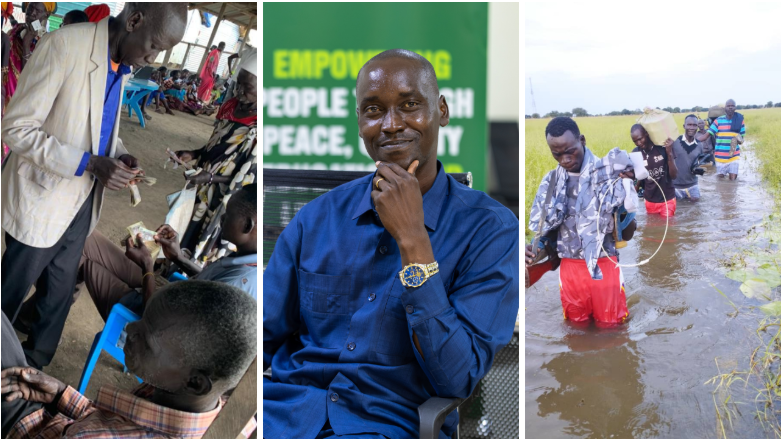


They climbed into a narrow canoe and paddled for several kilometres until that, too, could go no farther. Then they lifted the canoe onto their shoulders, balanced boxes of cash on their heads and continued the journey on foot towards communities waiting for assistance.
"When the canoe could no longer move, we carried it. People carried boxes of cash on their heads, another group carried the canoe, and together we continued the journey because the people were waiting for assistance," recalls Seme Nelson, Country Director for Finn Church Aid, during a courtesy call by a team from Equity Group in Juba.
"When you have more than business in whatever you do, you don't stop because the road has ended. We are first humans before we become humanitarian workers or bankers, " he continued.
That commitment extends beyond reaching remote communities. Nelson says the partnership has fundamentally changed how humanitarian assistance is delivered. What began with physically transporting cash across South Sudan evolved into paper vouchers that beneficiaries redeemed at selected shops.
Today, Equity supports biometric cash transfers that verify recipients before payments are made, reducing fraud, strengthening accountability and ensuring assistance reaches the intended beneficiaries while preserving their dignity and freedom to choose what their families need most.
Rather than prescribing food items, families receive cash that allows them to decide whether their greatest priority is food, medicine, school fees or other essentials. Equity provides the secure financial infrastructure while FCA identifies vulnerable households, teachers and community groups eligible for support.
The partnership is also helping sustain education in communities facing difficult circumstances. Nelson explains that, in many areas in South Sudan, teachers have experienced delays in receiving their official salaries.
"We need to ensure that schools remain open. That is why we come in as partners in ensuring that the prescribed US$40 equivalent per month can be paid to these teachers as they wait for the official salary to come from the government. This is a bridging arrangement, an incentive, not a replacement for the salary, to ensure schools remain open, children continue to learn and teachers continue to show up and teach," Nelson explained.
Equity facilitates the secure delivery of these incentives alongside cash assistance to vulnerable families in the same communities.
Looking back, Nelson says Equity has consistently demonstrated a willingness to go beyond conventional banking.
"If you don't have a humanitarian mindset in your business, the easiest thing is to walk away. For us, that willingness to go the extra mile is what has built our confidence in this partnership," he concluded.