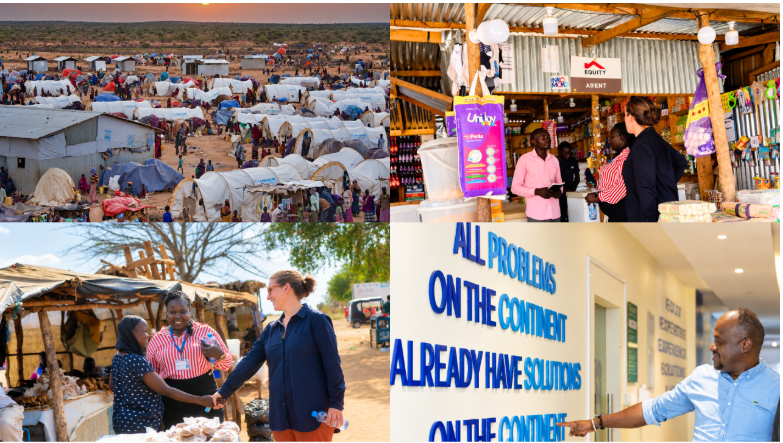


For decades, refugees have largely been viewed through humanitarian lenses. However, according to William Ngabonziza, Managing Director of Inkomoko South Sudan, a different story has been unfolding across, one driven by entrepreneurship, financial inclusion and opportunity.
Since launching operations in South Sudan in 2023, Inkomoko has supported more than 11,000 businesses, 65% of them owned by refugees. The organisation provides business training, coaching and market linkages, while working with Equity to ensure entrepreneurs can access the financing they need to start or scale their ventures.
Speaking when the Equity team visited Inkomoko's Juba offices, Ngabonziza said one of the biggest breakthroughs has been helping refugees access formal banking services for the first time.
"For the first time in South Sudan, a refugee opened a bank account because of Equity. Everyone knows refugees now have accounts with Equity. Refugees have ATMs cards, refugees can withdraw money, and some are even Equity agents within the communities where they live," he said.
The milestone followed collaboration between Equity, UNHCR and other partners, allowing refugees to open bank accounts and receive business financing through formal channels. According to Gavonziza, Equity plays a central role in the model by disbursing and supporting the loans that Inkomoko provides to displacement-affected entrepreneurs, many of whom are first-time borrowers and largely considered unbankable .
Currently South Sudan hosts more than 600,000 refugees from Sudan, alongside an estimated 1.8 million internally displaced persons. In remote locations such as Maban, where more than 250,000 refugees live, access to financial services remains limited.
The impact, however, is visible with Ngabonziza citing the example of a Sudanese refugee who arrived in South Sudan with a nursing background but no business experience. After receiving training and financing through Inkomoko, she opened a restaurant that now employs six people, including members of the host community.
"The displaced people of 2026 do not require charity. They require trust. Trust them, invest in them, and you will gain back what you have invested in them," he stated.
Beyond supporting refugee entrepreneurs, Equity also powers Inkomoko's day-to-day operations. Ngabonziza singled out Equity Online for Business, saying it enables staff across South Sudan to process payments, manage approvals and keep operations running efficiently, even in remote locations.
"I use it on my desk and on my phone. If there is an urgent payment, I can approve it wherever I am and business continues. It has eased our work tremendously. People now understand that refugees are not sitting and waiting to be supported. They are contributing to local economies, creating jobs and building businesses. They just need an opportunity," he continued.
As South Sudan continues to host large, displaced populations, that shift from aid dependency to economic participation is helping rewrite the refugee story, one business at a time.
Ngabonziza says Inkomoko's ambition is to support 100,000 businesses in South Sudan by 2030, while helping transform refugee-hosting areas from aid-dependent settlements into thriving economic hubs.
"Our success will be when these communities no longer depend on a single organization, but have a full range of financial services and business opportunities available to them," he concluded.